Foundation Repair & Drainage FAQ for Flower Mound
Straight answers about foundation problems, clay soil, permits, costs, and what drainage can and can't fix.
What are the signs of a foundation problem?
What are the signs of a foundation problem?
Common signs are cracks in drywall near doors and windows, doors and windows that stick, gaps along ceilings or trim, stair-step cracks in brick, and floors that slope or feel bouncy. Cracks that grow, or several signs at once, are worth an inspection. See foundation repair.
Do I need a structural engineer or just a foundation contractor?
Do I need a structural engineer or just a foundation contractor?
A contractor's inspection is often free and leads to a repair proposal. A structural engineer's report is paid and independent of any repair sale. For larger projects, disputes, or a home sale, an engineer's evaluation can be worth it. See foundation inspection.
Is a slab foundation different from pier and beam when it comes to repair?
Is a slab foundation different from pier and beam when it comes to repair?
Yes. Slab repairs usually focus on restoring support under the concrete with piers or fill. Pier and beam repairs deal with beams, piers, wood damage, and crawlspace moisture. See slab and pier and beam.
Should I water my foundation in summer?
Should I water my foundation in summer?
Some North Texas homeowners water the soil near the foundation during droughts to keep moisture more even. Whether it helps depends on the house and the soil, and overwatering can cause its own problems, so ask a professional before starting.
Does foundation repair come with a warranty?
Does foundation repair come with a warranty?
Contractors usually offer one, but terms vary a great deal. Ask what is covered, what is excluded, how long it lasts, and whether it transfers to a new owner. Get it in writing.
How do I choose a foundation repair contractor?
How do I choose a foundation repair contractor?
Compare written estimates, ask for proof of insurance and recent references, and ask the contractor to explain the measurements behind their plan. Texas doesn't issue a state license specifically for foundation repair, so verify credentials yourself. See the cost guide for what a good estimate shows.
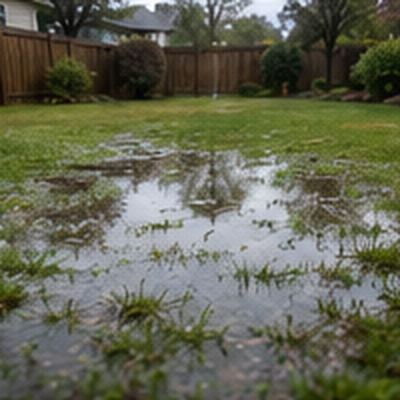
Why is my Flower Mound yard always muddy after it rains?
Why is my Flower Mound yard always muddy after it rains?
This comes down almost entirely to the ground beneath your lawn. Flower Mound and the surrounding Denton County area sit on expansive clay soil, often called "black gumbo" locally. Unlike sandy or loamy soil, clay has a very fine particle structure with extremely low permeability — water can't soak through it quickly. Instead of draining downward, rainwater spreads out and sits at or near the surface, sometimes for days after a storm has passed.
This is compounded by the fact that clay soil swells when wet, which can further compact the surface and slow drainage even more the longer a wet period continues. A muddy yard that stays wet long after your neighbor's has dried out is often a sign of poor grading, a low spot, or subsurface water that needs to be intercepted with a French drain before it reaches the surface at all.

Do I need a permit to install a drainage system in Flower Mound?
Do I need a permit to install a drainage system in Flower Mound?
It depends on where your system discharges. The Town of Flower Mound draws a clear line based on whether your project stays on private property or touches public infrastructure:
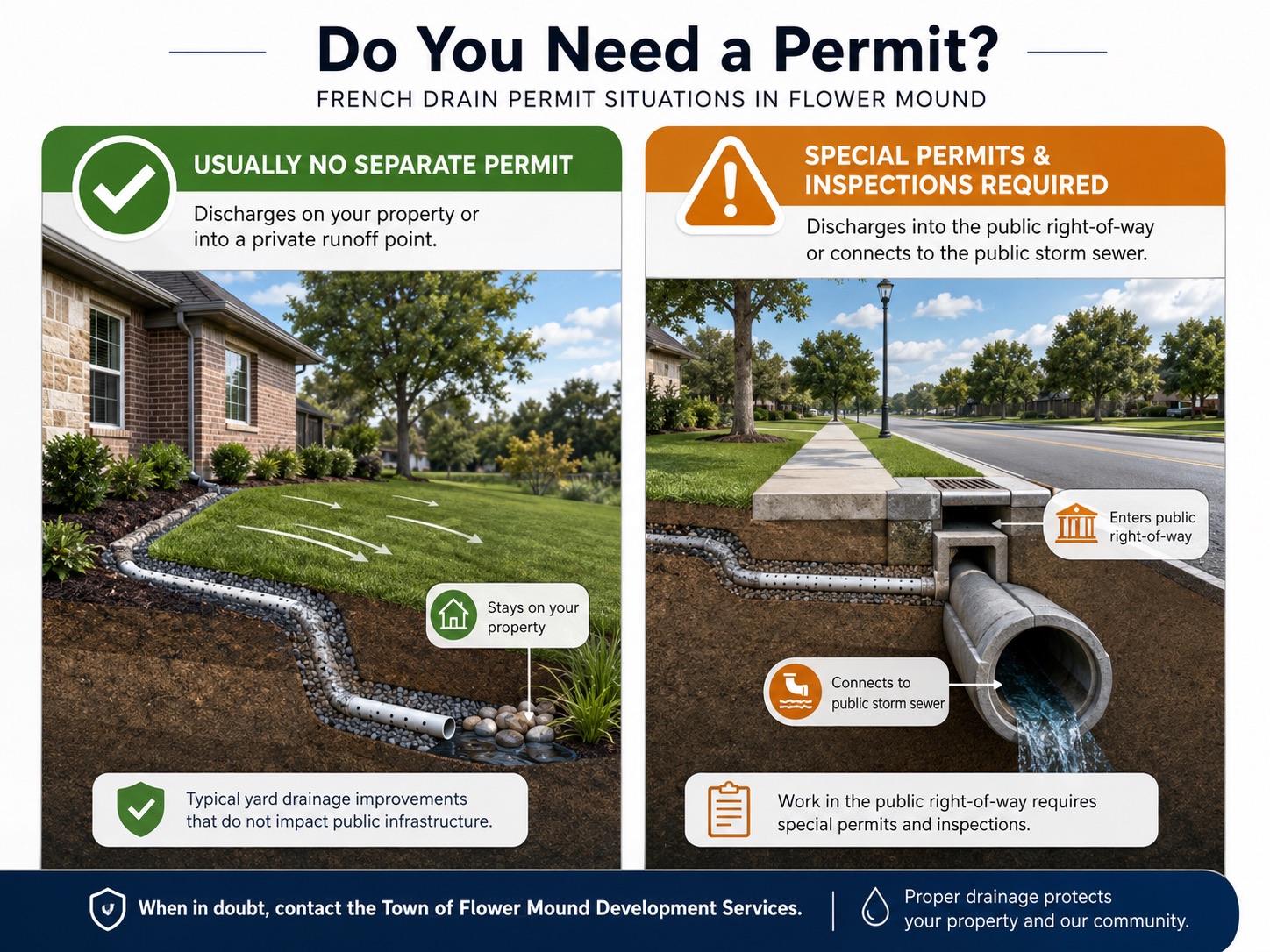
Because the determining factor is the discharge point — not the size of the project — it's worth confirming your specific plan with a contractor who designs around this distinction from the start. When in doubt, contact Town of Flower Mound Development Services directly.
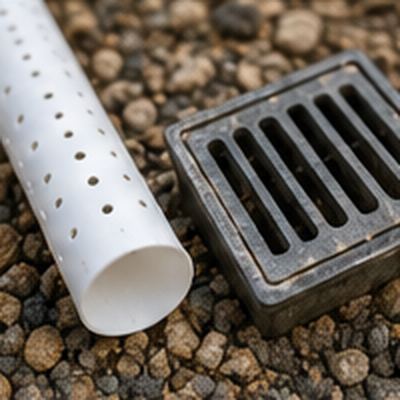
What is the difference between a French drain and a surface drain?
What is the difference between a French drain and a surface drain?
The core difference is where each system captures water. A French drain is a subsurface system: a trench containing perforated pipe, wrapped in gravel and filter fabric, buried below ground level to intercept water moving through the soil — including groundwater and hydrostatic pressure building up against a foundation — before it ever reaches the surface.
A surface drain (like a catch basin) captures water that's already pooling on top of the ground — on a patio, in a driveway dip, or in a garden bed — through a grated inlet, then routes it underground to a safe discharge point. Many Flower Mound properties benefit from both.
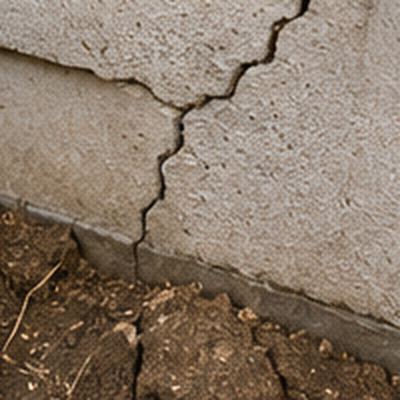
Will a French drain fix my foundation issues?
Will a French drain fix my foundation issues?
A properly installed French drain can be one of the most effective tools for preventing further foundation movement, but it's important to understand what it does and doesn't do. French drains work by intercepting groundwater and reducing the hydrostatic pressure and soil saturation that cause foundation upheaval — addressing the root cause of ongoing and future movement.
However, a French drain does not repair damage that has already occurred, such as existing cracks or an already-uneven slab. If you're seeing active signs of foundation distress, it's worth pairing a drainage evaluation with an assessment from a licensed foundation repair specialist.

How much does a drainage system cost in Flower Mound?
How much does a drainage system cost in Flower Mound?

Typical Installed Cost
Most homeowners spend in this range, depending on project factors.
Linear Footage
Longer drains require more materials and labor.
Trench Depth
Deeper trenches take more time to excavate.
Soil Difficulty
Dense North Texas clay is slower and harder to dig than loose soil.
Discharge Method
A gravity pop-up emitter costs less than a dedicated sump basin.
A single catch basin addressing one problem spot is a much smaller project than a whole-property French drain and re-grading system for a large lot near Grapevine Lake or Bartonville. The most accurate way to get a number is a free, no-obligation on-site assessment.
Should a French drain tie into my gutter downspouts?
Should a French drain tie into my gutter downspouts?
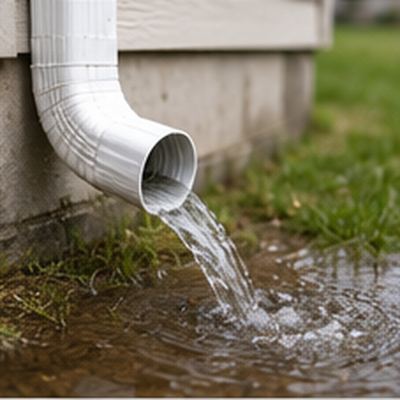
Best practice is to keep them separate. Gutter downspouts can release a large burst of water in a very short time during a heavy storm, along with leaves, grit, and other roof debris — far more volume and debris than a perforated French drain pipe is designed to absorb along its length.
Tying the two together risks overloading the French drain during the exact storms you're relying on it for, and the debris carried by roof runoff can clog the pipe's perforations from the inside. The better approach is a dedicated, solid-wall (non-perforated) PVC line that carries roof water away on its own path, kept separate from any perforated French drain trench.

How long does French drain installation take?
How long does French drain installation take?
For a typical residential French drain project, installation generally takes one to three days, depending on the length of the trench run, soil conditions, and whether the project includes additional work like catch basins or re-grading. Properties with mature landscaping, existing hardscape, or particularly dense clay can add time.
Can heavy rain damage my plumbing, not just my foundation?
Can heavy rain damage my plumbing, not just my foundation?
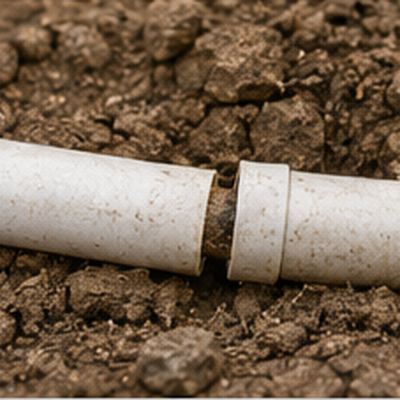
Yes — this is a less obvious but very real risk of poor drainage in expansive clay soil. When soil around buried plumbing lines repeatedly swells and shrinks through wet and dry cycles, it puts uneven, ongoing stress on pipe joints and connections, which can cause pipes to shift, separate, or crack over time.

Is it normal for my yard to have large cracks in the summer?
Is it normal for my yard to have large cracks in the summer?
Unfortunately, yes — it's one of the clearest visible signs of expansive clay soil at work. When our clay-heavy soil dries out during Denton County's hot, often rainless summer stretches, it shrinks and contracts, opening up cracks that can be an inch or more wide in severe cases.
While some seasonal cracking is common even on well-drained lots, excessive cracking — especially near your foundation — can signal that inadequate drainage is allowing more extreme saturation-to-drought swings right where you need soil stability the most.
Still have questions?
Talk to a Flower Mound drainage specialist — no obligation.
Free Inspection Request
Tell Us What's Going On
Leave your details and a local, independent contractor will follow up. No obligation.